Introduction
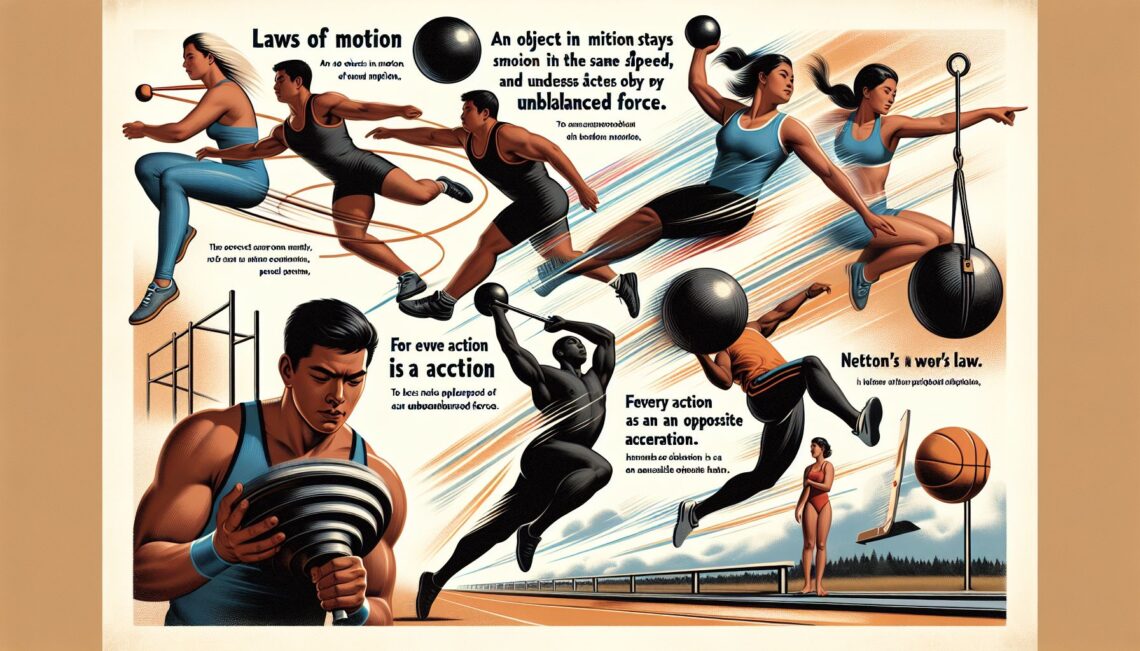
Newton’s three laws of motion have a significant impact on various aspects of our daily lives, including sports activities. By understanding these fundamental principles, athletes, coaches, and sports enthusiasts can optimize their performance and enhance their training programs. In this article, we will explore Newton’s laws of motion and how they are applied in the realm of sports.
Newton’s First Law in Sports
Newton’s first law states that an object at rest will remain at rest, and an object in motion will stay in motion unless acted upon by an external force. This law is crucial in sports, especially when it comes to maintaining balance, stability, and momentum during different athletic movements.
For example, when a soccer player kicks a ball, the ball will continue to move in a straight line unless it is stopped by an opposing player or comes into contact with the goalpost. Understanding this concept helps players anticipate the trajectory of the ball and adjust their positioning accordingly.
Learn more about Newton’s First Law in Sports
Newton’s Second Law in Sports
Newton’s second law of motion states that the acceleration of an object is directly proportional to the force applied to it and inversely proportional to its mass. This law is particularly relevant in sports that require explosive movements and quick changes in speed, such as sprinting, weightlifting, and gymnastics.
In sprinting, for instance, the force exerted by a runner’s leg muscles directly influences their acceleration. By applying more force to the ground with each stride, sprinters can increase their speed and propel themselves forward at a faster rate.
Check out the application of Newton’s Second Law in Sports
Newton’s Third Law in Sports
Newton’s third law of motion states that for every action, there is an equal and opposite reaction. In sports, this law is evident during activities that involve collisions, impacts, or projectile motions, such as basketball, tennis, and baseball.
For instance, when a basketball player jumps to make a shot, they exert a downward force on the ground. In response, the ground exerts an equal and opposite force that propels the player upward, allowing them to jump higher and reach the basket more effectively.
Read more about Newton’s Third Law in Sports
Conclusion
By applying Newton’s laws of motion in sports activities, athletes can refine their skills, improve their performance, and reduce the risk of injuries. Coaches and trainers can design more effective training programs based on these fundamental principles, leading to better results and overall success in sports competitions.
For further information on how Newton’s laws influence sports activities, please visit Hukum Newton dan Penerapannya dalam Aktivitas Olahraga.