Introduction
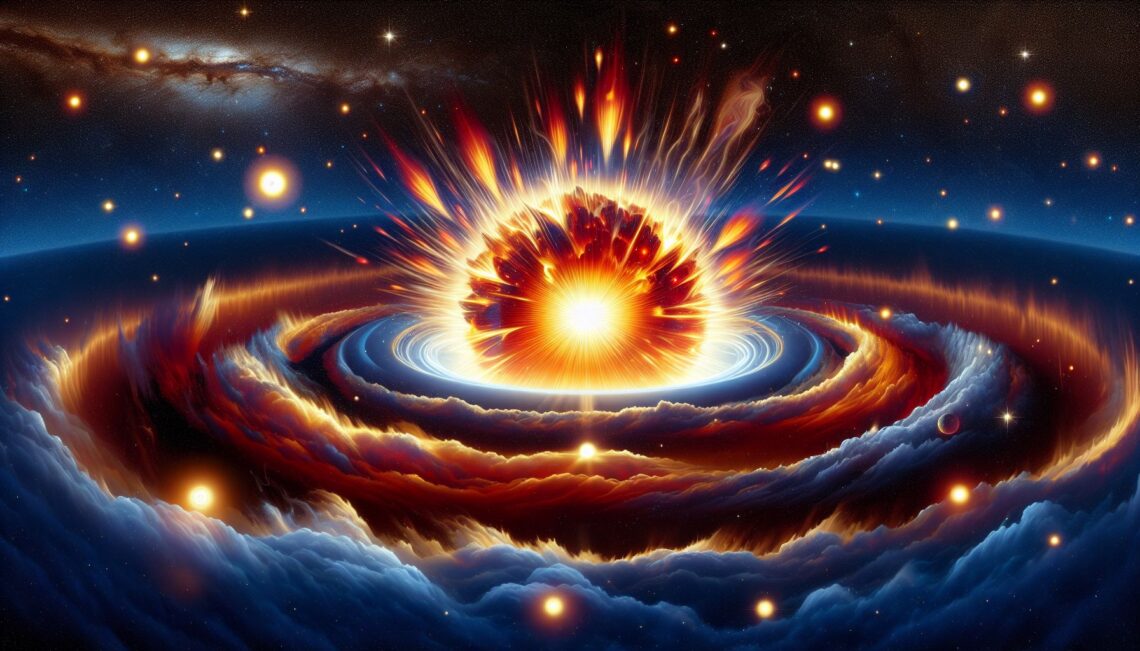
Supernovae are powerful stellar explosions that occur at the end of a star’s life cycle. These events release immense amounts of energy and matter into space, impacting the surrounding environment. In this article, we will explore the phenomena of supernovae and delve into the consequences of these star explosions on galaxies.
What Causes Supernova Explosions?
Supernova explosions can be triggered by two main mechanisms: a Type Ia supernova occurs when a white dwarf star accumulates mass from a companion star, surpassing a critical limit and undergoing a thermonuclear explosion. On the other hand, a Type II supernova results from the core collapse of a massive star at the end of its life.
The Impact of Supernova Explosions on Galaxies
When a supernova occurs, it releases heavy elements like iron, nickel, and oxygen into space, enriching the interstellar medium. These elements are crucial for the formation of new stars and planetary systems. Additionally, supernovae generate shock waves that compress gas clouds, triggering the formation of new stars.
Effects on Galaxy Evolution
Supernova explosions play a significant role in shaping the evolution of galaxies. The energy and matter released during these events can influence the dynamics of galactic structures, such as spiral arms and star clusters. This phenomenon impacts the distribution of stars and gases within a galaxy, driving its evolution over time.
To learn more about the fascinating phenomena of supernovae and their impact on galaxies, you can visit Space.com and NASA’s official website.
For a detailed exploration of the subject, check out Fenomena Supernova dan Dampak Ledakan Bintang Bagi Galaksi.